Helpful People May Have Fewer Friends
Being too helpful can lead to isolation. Constantly assisting friends can be a cover for insecurities.

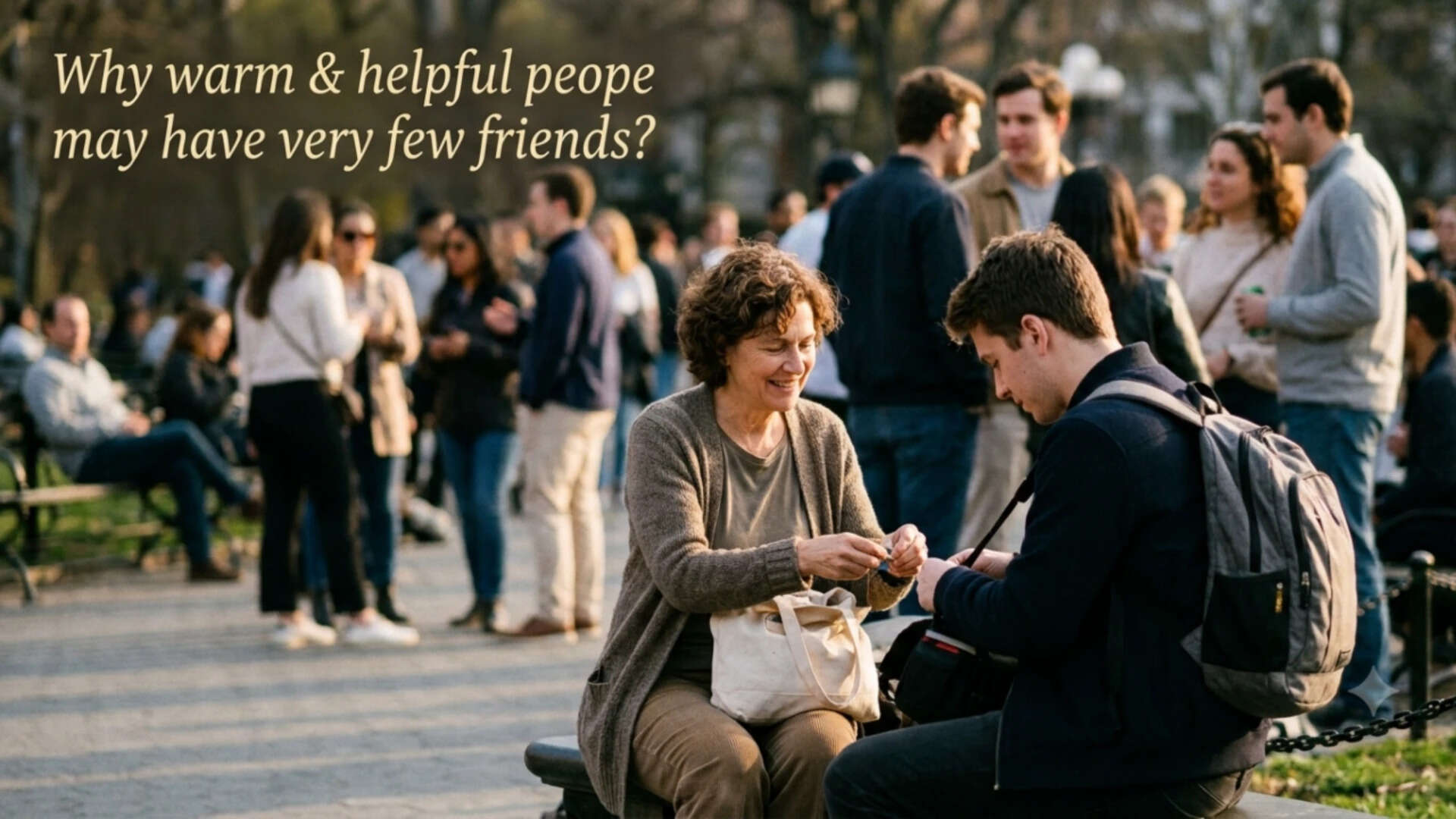
A recent study in psychology reveals that individuals who constantly help their friends and acquaintances may actually have fewer friends than those who do not. This may seem counterintuitive, as one would expect that being helpful and generous would lead to stronger and more numerous relationships. However, psychologists suggest that this 'caretaker' behavior can often be a sign of deeper insecurities.
According to experts, people who engage in this behavior may be using it as a defense mechanism to avoid vulnerability. By constantly helping others, they may feel a sense of worth and usefulness, which can be closely tied to their self-esteem. This can lead to a pattern of behavior where the individual prioritizes others' needs over their own, often to the point of exhaustion.
Dr. experts in the field note that this dynamic can create superficial relationships, where the helper feels unappreciated and overworked. Despite their admirable generosity, they may find themselves feeling isolated and alone, as their relationships lack depth and intimacy. This can be a difficult pattern to break, as the individual may feel that their worth is tied to their ability to help others.
The reasons behind this behavior are complex and multifaceted. In some cases, it may be a result of past experiences or trauma, where the individual learned to associate their worth with their usefulness. In other cases, it may be a result of societal pressures or expectations, where individuals feel that they need to be constantly helpful and generous in order to be valued.
Regardless of the reasons, the consequences of this behavior can be severe. Individuals who engage in 'caretaker' behavior may find themselves feeling burned out, resentful, and isolated, despite their best efforts to help others. It is essential for these individuals to recognize the patterns of behavior that may be contributing to their feelings of loneliness and to seek help and support in order to develop more balanced and healthy relationships.
In order to break this pattern, individuals need to learn to prioritize their own needs and develop a sense of self-worth that is not tied to their ability to help others. This can involve setting boundaries, learning to say no, and engaging in activities that bring them joy and fulfillment. By doing so, they can develop more authentic and meaningful relationships, and avoid the feelings of isolation and loneliness that can result from 'caretaker' behavior.
Ultimately, being a helpful and generous person is admirable, but it is essential to do so in a way that is balanced and healthy. By recognizing the potential pitfalls of 'caretaker' behavior and taking steps to prioritize their own needs, individuals can develop stronger, more meaningful relationships and avoid the negative consequences of this behavior.