Iran's top officials show emotion as Supreme Leader Khamenei's funeral ceremony begins
Iran's Speaker Mohammad Baqer Ghalibaf and Foreign Minister Abbas Araghchi were visibly emotional as funeral rites commenced for Supreme Leader Ayatollah Ali Khamenei. The ceremony marks a significant moment in Iranian politics.

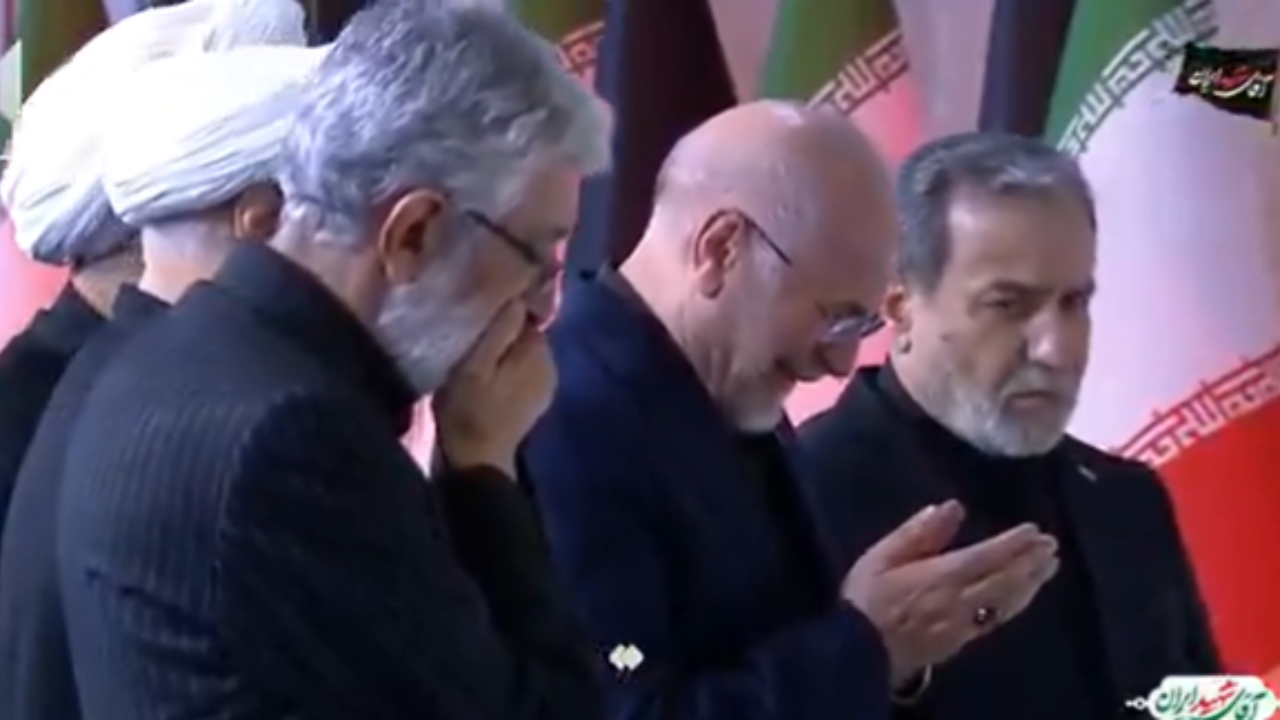
Iran's political establishment gathered for a solemn occasion as the funeral ceremony of Supreme Leader Ayatollah Ali Khamenei began, with senior government officials displaying visible emotion during the proceedings.
Mohammad Baqer Ghalibaf, who serves as the Speaker of Iran's Parliament, and Foreign Minister Abbas Araghchi were among the dignitaries present at the funeral. Both officials appeared visibly moved during the initial stages of the ceremony, reflecting the significance of the moment for Iran's leadership structure.
Khamenei, who served as Supreme Leader of Iran since 1989, held one of the most powerful positions in the Iranian political system. As the highest-ranking political and religious authority in the country, his role extended beyond ceremonial functions to include command of the armed forces, control of state media, and significant influence over the judiciary. His death represents a pivotal transition point for Iran's governance and international relations.
The funeral ceremony drew attention from across Iran's government hierarchy, with the assembly of senior officials underscoring the importance of the moment. The display of emotion from Ghalibaf and Araghchi highlighted the personal and political significance of Khamenei's passing within Iran's leadership circles.
Khamenei's death triggers a constitutional process for succession. According to Iran's political system, the Assembly of Experts, a body of senior clerics, is responsible for selecting the next Supreme Leader. This succession process will shape Iran's domestic and foreign policy directions in the coming period. The transition occurs amid regional tensions and ongoing international scrutiny of Iran's nuclear programme and foreign policy initiatives.
Iran's government is expected to maintain continuity during this transition period, with the interim leadership structure managing state affairs until a new Supreme Leader is formally appointed. International observers are closely monitoring developments, as the succession could influence Iran's engagement with neighbouring countries and global powers.