
Best Hospitals in Mumbai: A Practical Guide
A practical, area-wise guide to Mumbai's best government and private hospitals: what each is known for, rough cost bands, insurance tips and how to reach emergency care fast.
'%3E%3Crect%20width%3D'96'%20height%3D'96'%20fill%3D'%23E65100'%2F%3E%3Ccircle%20cx%3D'30'%20cy%3D'24'%20r%3D'44'%20fill%3D'%23fff'%20opacity%3D'.12'%2F%3E%3Ccircle%20cx%3D'60'%20cy%3D'74'%20r%3D'40'%20fill%3D'%23000'%20opacity%3D'.10'%2F%3E%3C%2Fg%3E%3Cg%3E%3Ccircle%20cx%3D'48'%20cy%3D'48'%20r%3D'15'%20fill%3D'none'%20stroke%3D'%23fff'%20stroke-width%3D'3'%2F%3E%3Cpath%20fill%3D'%23fff'%20d%3D'M48%2037%20l3.5%2011%20-3.5%2011%20-3.5%20-11%20z'%2F%3E%3Ccircle%20cx%3D'48'%20cy%3D'48'%20r%3D'2.2'%20fill%3D'%23fff'%2F%3E%3C%2Fg%3E%3C%2Fsvg%3E)
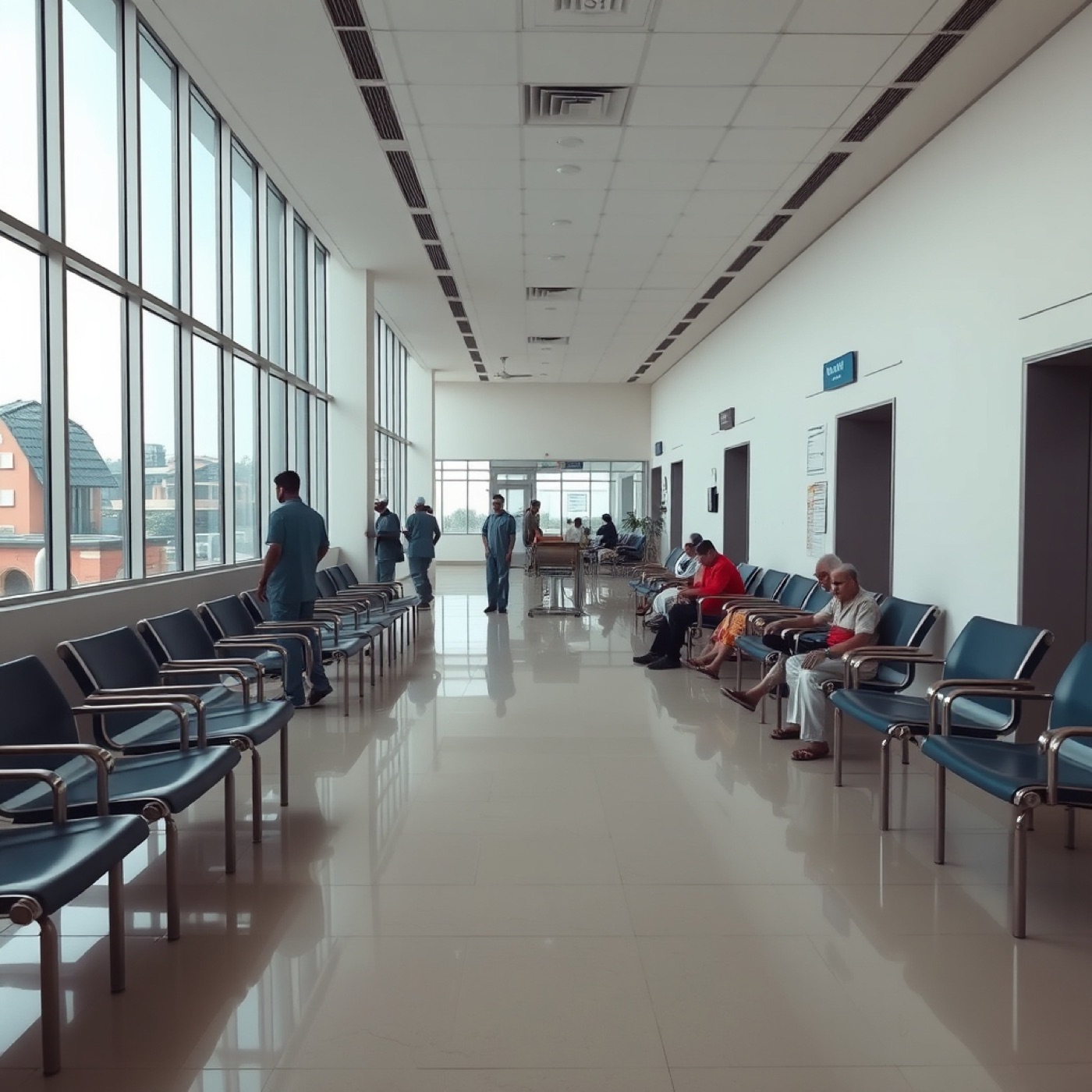
When you actually need a hospital in Mumbai, you rarely have time to research one. Traffic is unpredictable, the good beds fill up, and the difference between a smooth admission and a chaotic one often comes down to knowing where to go before the crisis hits. This guide is the map I wish more Mumbaikars kept in their heads: which hospitals are strong in which part of the city, what they are genuinely known for, roughly what they cost, and how to reach emergency care without losing precious minutes.
A quick, honest caveat before we start. This is practical navigation, not medical advice. For any real symptom, call your doctor or an ambulance rather than reading a guide. The prices below are broad ballparks that shift constantly with the procedure, the surgeon, the room category and your insurance, so treat them as orientation, not quotes. And no single hospital is best at everything; the smart question is always “best for what, and nearest to whom.”
Mumbai hospitals at a glance
Keep this table in your head, or a screenshot of it in your phone. It maps the city’s zones to the low-cost government anchors, the premium private names, and what each cluster is genuinely known for.
| Zone | Government / low-cost | Premium private | Especially strong for |
|---|---|---|---|
| South Mumbai | JJ, St George, GT | Breach Candy, Jaslok, Saifee, Bhatia | Trauma, burns, poisoning, general surgery |
| Parel–Sion belt | KEM, Sion, Tata Memorial | Hinduja, Global | Cancer, cardiac, neuro, transplants |
| Western suburbs (Bandra–Andheri) | Holy Family | Lilavati, Nanavati Max, Kokilaben | Cardiac, orthopaedics, oncology, neuro |
| Eastern suburbs (Ghatkopar–Mulund–Powai) | local nursing homes | Fortis Mulund, Hiranandani Powai | Cardiac, transplants, emergency |
| Navi Mumbai | MGM | Apollo, Fortis Hiranandani | Cardiac, multi-organ care |
| Far north (Borivali–Dahisar) | municipal hospitals | local multi-specialities | Your nearest 24-hour casualty |
How to think about hospitals in Mumbai
Mumbai’s hospital landscape splits into three rough tiers, and understanding them saves both money and worry.
Government and public hospitals such as KEM, Sion, JJ and Nair carry the heaviest patient load in the country. They run some of the best specialist departments anywhere in India, train the doctors the private sector later hires, and cost very little, often a few hundred rupees for treatment that would run into lakhs elsewhere. The trade-off is volume: long queues, shared wards, harried staff and an experience that can feel gruelling for a family used to comfort. For complex, expensive conditions where the specialist matters more than the surroundings, though, they are genuinely world-class.
Large private multi-speciality chains such as Kokilaben, Hinduja, Lilavati, Nanavati, Fortis and Wockhardt sit at the other end. You pay for comfort, faster diagnostics, single rooms, prompt attention and strong specialists on tap. This is where insurance earns its keep, because out-of-pocket costs here climb quickly.
Trust and mid-tier hospitals such as Bhatia, Saifee, Holy Family and Hiranandani sit between the two on both cost and crowding. Many are charitable trusts, which can mean noticeably gentler bills for the same quality of clinical care, and they are often the sweet spot for a middle-class family that wants a private room without a corporate-hospital invoice.
A useful rule runs through all of this: for a planned procedure, choose on specialist reputation; for a sudden emergency, choose on proximity and whether they have a working casualty and ICU right now. The most famous hospital across town is useless if the patient is in the back of a car stuck at Mahim causeway.
Sort out money and paperwork before you need it
Cost is the part people freeze on, so settle it in calm times. If you have private health insurance, know whether your policy is cashless at your preferred hospital and keep the insurer’s card, policy number and 24-hour helpline saved. Cashless approvals move far faster when the hospital’s insurance desk has your details up front; without them, you may have to pay and claim reimbursement later, which is slower and more stressful in a crisis.
If you do not have private cover, learn the government schemes now rather than at a hospital counter. Ayushman Bharat (PM-JAY) and Maharashtra’s Mahatma Jyotirao Phule Jan Arogya Yojana (MJPJAY) cover a large list of surgeries and treatments for eligible families at empanelled hospitals, including several private ones. Carry your ration card, Aadhaar and any scheme card, and ask the hospital’s Arogya Mitra or scheme desk directly; eligibility and coverage change, so confirm rather than assume.
Three more habits worth the ten minutes they take. Keep a small folder, physical or on your phone, with a list of current medicines, known allergies, past major conditions, blood group and recent key reports. Note where the nearest blood banks are; the big teaching hospitals like KEM, Sion, JJ and Tata run their own, and voluntary blood banks dot the city. And if a relative has a chronic condition, ask their treating consultant which hospital they would want you taken to in an emergency, so the decision is already made.
South Mumbai
South Mumbai has the city’s oldest and most storied institutions, many attached to teaching colleges and woven into the history of the city itself.
Government anchors
JJ Hospital (Byculla) is a sprawling government teaching hospital and the go-to public centre for major trauma, burns and poisoning cases in the southern half of the city. Care is heavily subsidised, often near-free, and its casualty is built to take exactly the emergencies private hospitals may hesitate over. Expect crowds, and expect competence under pressure. GT Hospital and St George Hospital (near CSMT) are smaller public hospitals, handy for anyone working or living in the Fort and CSMT belt who needs quick, affordable attention without trekking uptown.
Private and trust hospitals
Saifee Hospital (Charni Road) is a well-run trust hospital known for general surgery, bariatrics and a calm, organised feel, at mid-to-upper private pricing. Bhatia Hospital (Tardeo) is a long-standing trust hospital respected for cardiology and general medicine, and usually gentler on the wallet than the big corporate names. Breach Candy Hospital (Breach Candy) is the premium South Mumbai address, favoured for its nursing, diagnostics and discreet service; expect the higher end of private costs. Jaslok Hospital (Peddar Road) is strong in neurosciences, nephrology and oncology and has been a referral centre for decades. Wockhardt Hospital (Mumbai Central) and Sir HN Reliance Foundation Hospital (Girgaon) round out the area, the latter a modern multi-speciality centre with strong cardiac and cancer programmes.
Getting there: South Mumbai is well served by the Western and Central local train lines and by the coastal road for those coming by car. For Peddar Road and Breach Candy, avoid the peak evening crawl if you can plan around it; the difference between 6pm and 8.30pm on those roads is enormous.
Rough cost band: Government treatment runs under a few thousand rupees for most cases. Private consultations typically land at ₹1,000–2,500, with private-room admissions running from tens of thousands into several lakhs for major surgery.
Central Mumbai (Parel, Sion, Mahim)
The Parel–Sion belt is arguably the medical heart of the city, and for serious specialist illness it is often where Mumbai, and much of India, ends up.
KEM Hospital (Parel) is one of India’s most respected public teaching hospitals, with formidable departments across cardiology, neurology, oncology and paediatrics. If cost is the constraint and you need serious specialist care, KEM is a genuine national-grade option, provided you are prepared for volume and waiting. Tata Memorial Hospital (Parel) is the country’s leading cancer centre; people travel from every state for oncology here, and it offers heavily subsidised treatment alongside private options. For almost any cancer diagnosis, it is the first name people are pointed toward, and a second opinion here is worth the effort even if you treat elsewhere.
Sion Hospital (Sion) is another major government teaching hospital and a key trauma centre for the central and eastern suburbs, well placed near the junctions where accidents happen. Hinduja Hospital (Mahim) is a top-tier private multi-speciality institution known for nephrology, gastroenterology, neurosciences and transplants, with a reputation for clinical rigour rather than glossiness. Global Hospital (Parel) is strong in transplants and complex multi-organ care.
Getting there: Parel and Lower Parel sit on the Central and Western lines respectively, with Elphinstone/Prabhadevi close by; Sion is on the Central line and near the Eastern Express Highway. If you are visiting a patient here regularly, read up on getting around the city, because parking around Parel is genuinely hard and a train-plus-short-auto plan often beats driving.
Rough cost band: KEM, Sion and subsidised Tata care are very affordable. Hinduja and Global sit in the upper-private range, with major surgeries commonly running into several lakhs.
Western suburbs (Bandra to Andheri)
This is where much of the city’s newer private-hospital capacity has landed, tracking the money and population that moved north over the decades.
Lilavati Hospital (Bandra) is a marquee multi-speciality hospital popular for cardiology, orthopaedics and neurology, and a frequent choice for well-off western-suburb families. Holy Family Hospital (Bandra) is a respected trust hospital, generally more affordable than the corporate names, with solid general and maternity care, making it the value pick in this stretch. Nanavati Max Hospital (Vile Parle) is a large multi-speciality centre with strong cardiac, cancer and orthopaedic departments, well placed for anyone near the airport. Kokilaben Dhirubhai Ambani Hospital (Andheri West) is one of the most advanced private hospitals in the city, known for oncology, cardiac sciences, neurosciences and cutting-edge technology; it sits firmly at the premium end. Seven Hills Hospital (Andheri East) and Criticare (Andheri) add further capacity in the central-suburb belt.
Getting there: The Western line serves Bandra, Khar, Vile Parle and Andheri, and the Metro now makes east-west movement around Andheri far easier than it used to be. For Kokilaben, the Western Express Highway and the Metro are your friends. If you are house-hunting and health access matters to you, factor this in early; our guide to renting a flat in Mumbai is worth a read alongside the neighbourhood guides for exactly this reason.
Rough cost band: Holy Family is the value choice; Lilavati, Nanavati and Kokilaben are firmly premium, with complex procedures often crossing several lakhs.
Eastern suburbs (Ghatkopar, Mulund, Powai)
The eastern suburbs have quietly built strong hospital coverage, which matters given how far they sit from South Mumbai in both distance and traffic.
Fortis Hospital (Mulund) is a large, well-regarded multi-speciality hospital known for cardiac care, transplants and oncology, and the natural choice for the north-eastern suburbs. Hiranandani Hospital (Powai) is a modern multi-speciality centre popular with the Powai and Ghatkopar catchment, with good general and emergency services and an easier arrival experience than the older South Mumbai names. Surya Hospital and Godrej Memorial (Vikhroli), along with various nursing homes, fill in local and everyday needs.
Getting there: The Central line covers Ghatkopar and Mulund; the Eastern Express Highway and the Metro through Ghatkopar and Powai help with cross-suburb trips that would otherwise be miserable by road.
Rough cost band: broadly premium-private, though often a notch below the flashiest South Mumbai and Bandra names for comparable procedures.
Navi Mumbai and the far north
Apollo Hospital (Navi Mumbai) and MGM Hospital (Vashi/Kalamboli) anchor serious care across Navi Mumbai, with Apollo strong across cardiac and multi-organ specialities. Fortis Hiranandani (Vashi) is another solid multi-speciality option. If you live in Navi Mumbai, resist the reflex to head to a famous South Mumbai name across the harbour; for anything time-critical, these local centres are the sensible default.
In the far northern suburbs, hospitals around Borivali, Kandivali and Dahisar handle local emergencies capably. Residents there should identify their nearest 24-hour casualty in advance rather than assuming they can reach a Bandra or South Mumbai name in time; on a bad traffic day that assumption can cost an hour you do not have.
Planned procedure or sudden emergency?
Almost every hospital decision falls into one of two modes, and they call for opposite instincts.
For a planned procedure, take your time and choose on the strength of the specific department and surgeon, not the hospital’s overall fame. Get a second opinion, ideally from a government teaching hospital where consultants see enormous volumes, and ask blunt questions: how many of this operation the surgeon does a year, the realistic total cost including implants and ICU days, and what recovery actually looks like. Distance and comfort matter less here because you can plan the journey and the stay.
For a sudden emergency, throw the reputation rankings out. The nearest competent casualty with a free bed beats the best hospital across town every time. This is why the preparation below matters more than any ranking: the goal is not to reach the perfect hospital, it is to reach a good-enough one fast.
How to find emergency care fast
In a genuine emergency, competence plus proximity wins. Build these habits before you ever need them.
- Save two numbers now. 108 is the national emergency ambulance service and 102 is another public ambulance line. Many private hospitals also run their own ambulance desks; save the number for the two nearest to home.
- Know your nearest three casualties, mixing one government and two private, so you have fallbacks if one is full. Full ICUs and “no beds” are a real Mumbai problem on busy nights.
- For trauma and accidents, government trauma centres like KEM, Sion and JJ are built for exactly this and will not turn you away for inability to pay. This is one situation where the public system is often the right first call, not the fallback.
- Call ahead if you can. A two-minute call to the casualty desk to confirm ICU or specialist availability can redirect you before you waste half an hour in traffic heading to the wrong place.
- Carry the basics, or keep them where anyone in the family can grab them: current medicines, known allergies, major past conditions, blood group and any insurance or health-scheme card. For cashless treatment, keep insurer details handy, because approvals move faster with paperwork ready.
- Do not over-rely on the ambulance during peak hours. Mumbai ambulances get stuck in the same jams as everyone else, and sometimes a private car with a calm driver reaches a nearby hospital faster than one arriving from across the city. Judge by distance and severity, and let a passenger keep the patient stable and the phone on speaker with the hospital.
A monsoon footnote
From June to September the health picture shifts, and it is worth knowing. Waterlogging brings a spike in leptospirosis, dengue, malaria and stomach infections, and a fever after wading through flooded streets is not something to wait out. If you have walked through standing water with a cut or open skin, mention it to the doctor early, because timely leptospirosis treatment matters. Flooding also snarls the very roads you would use to reach a hospital, so in the monsoon the nearest casualty argument gets even stronger. Our guides to monsoon health and safety and surviving the monsoon commute are worth reading before the first big downpour, not after.
A practical wrap-up
The smart move is to do the thinking before you ever need it. Pick your default hospital for a planned procedure based on the speciality you actually care about, then separately note the two or three nearest casualties to your home and workplace for emergencies. Keep the ambulance numbers in your phone, a medicine-and-allergy note in your wallet, your blood group memorised, and your insurance or scheme details somewhere you can grab them at 2am. Mumbai has genuinely world-class medicine spread across every corner of the city, from the teaching hospitals of Parel to the glass towers of Andheri; a few minutes of preparation is what turns that abundance into help you can actually reach when it counts.
Frequently Asked Questions
Which is the best hospital in Mumbai for cancer treatment?
Tata Memorial Hospital in Parel is India's leading cancer centre and the first name most people are pointed toward for any cancer diagnosis. It offers heavily subsidised treatment alongside private options, which is why patients travel from across the country for oncology there. For a second opinion, it is worth the effort even if you plan to treat closer to home, and premium private centres like Kokilaben in Andheri and Hinduja in Mahim also run strong oncology programmes.
What are the best government hospitals in Mumbai for emergencies?
KEM (Parel), Sion, JJ (Byculla) and Nair are the major public teaching hospitals and carry the heaviest emergency load in the city. Their trauma centres are built for major accidents, burns and poisoning cases, and they will not turn you away for inability to pay. Treatment is heavily subsidised, often just a few hundred to a few thousand rupees, though you should be prepared for crowds and waiting.
How much does private hospital treatment cost in Mumbai?
Private consultations typically run about ₹1,000 to ₹2,500, while private-room admissions range from tens of thousands of rupees into several lakhs for major surgery, depending on the procedure, surgeon and room category. Premium names like Kokilaben, Breach Candy, Lilavati and Hinduja sit at the higher end, while trust hospitals such as Holy Family, Bhatia and Saifee are usually gentler on the wallet. Always ask for a full estimate including implants and ICU days before a planned procedure.
What number do I call for an ambulance in Mumbai?
Dial 108 for the national emergency ambulance service or 102 for another public ambulance line, and save both in your phone now. Many private hospitals also run their own ambulance desks, so it helps to save the number of the two nearest to your home. Remember that ambulances get stuck in the same traffic as everyone else, so for a very short distance a private car with a calm driver can sometimes be faster.
Which hospitals in Mumbai are best in the western suburbs?
Around Bandra to Andheri, Lilavati (Bandra) is popular for cardiology, orthopaedics and neurology, while Kokilaben (Andheri West) is one of the most advanced private hospitals in the city for oncology, cardiac sciences and neurosciences. Nanavati Max in Vile Parle is a strong all-rounder well placed for those near the airport. For a more affordable option, Holy Family in Bandra is a respected trust hospital with solid general and maternity care.
How do I use cashless insurance or a government health scheme at a Mumbai hospital?
For private insurance, confirm in advance whether your hospital is cashless under your policy and keep your insurer card, policy number and 24-hour helpline handy, as approvals move much faster with paperwork ready. If you do not have private cover, ask the hospital's scheme desk about Ayushman Bharat (PM-JAY) and Maharashtra's MJPJAY, which cover many treatments for eligible families at empanelled hospitals. Carry your Aadhaar, ration card and any scheme card, and confirm eligibility directly rather than assuming.