Modi, Japan push for early Quad summit amid regional tensions
India and Japan reaffirm commitment to Quad meeting, condemn Pakistan-based terror groups.
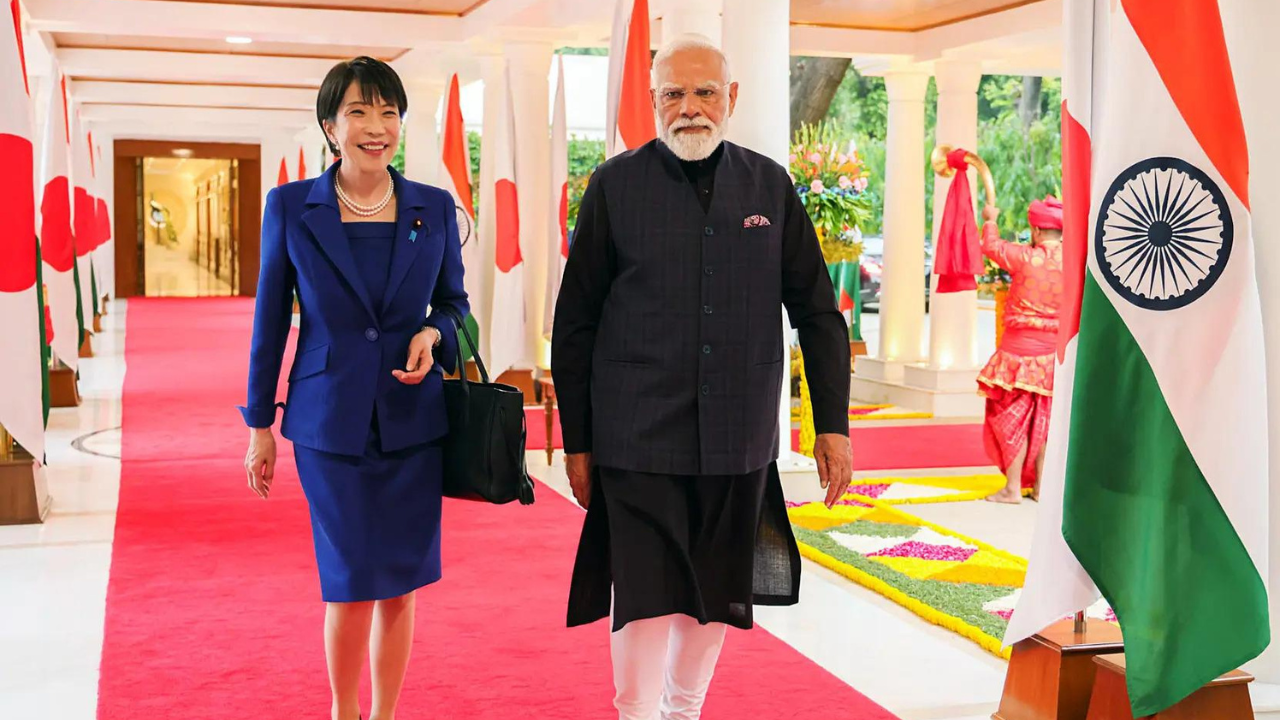
Prime Minister Narendra Modi and Japanese Foreign Minister Sanae Takaichi have jointly committed to accelerating plans for an early Quad summit, signaling renewed momentum for the four-nation alliance amid rising geopolitical tensions in Asia. During high-level talks, both leaders emphasized the strategic importance of maintaining open sea routes and resisting coercive measures in international waters.
The two nations released a comprehensive joint statement addressing multiple regional security concerns. India and Japan explicitly condemned cross-border terrorism originating from Pakistan, naming militant organizations including Jaish-e-Mohammed and Lashkar-e-Taiba as major threats. The statement also backed India's inclusion in the International Energy Agency, recognizing New Delhi's growing role in global energy security and climate discussions.
Both countries voiced strong opposition to unilateral military actions and territorial claims in the East and South China Seas, indirectly targeting China's assertive posture in contested waters. The emphasis on freedom of navigation underscores shared concerns about maintaining rules-based maritime order in critical international shipping corridors, particularly the Strait of Hormuz.
The accelerated Quad timeline reflects growing coordination among India, Japan, Australia, and the United States to counter Beijing's expanding influence in the Indo-Pacific region. The alliance seeks to present a united front on security, trade, and democratic values. The joint statement demonstrates India and Japan's synchronized approach to regional challenges, with Tokyo viewing New Delhi as a crucial partner in maintaining balance in Asia.
The early summit signals intent to strengthen practical cooperation on maritime security, defense, and economic partnerships, while collectively addressing terrorism and territorial disputes that threaten regional stability.
Source: Times of India