India and Japan Strengthen Defence, AI, and Energy Partnership at Summit
Japanese PM Takaichi visits India, both nations chart economic collaboration roadmap.

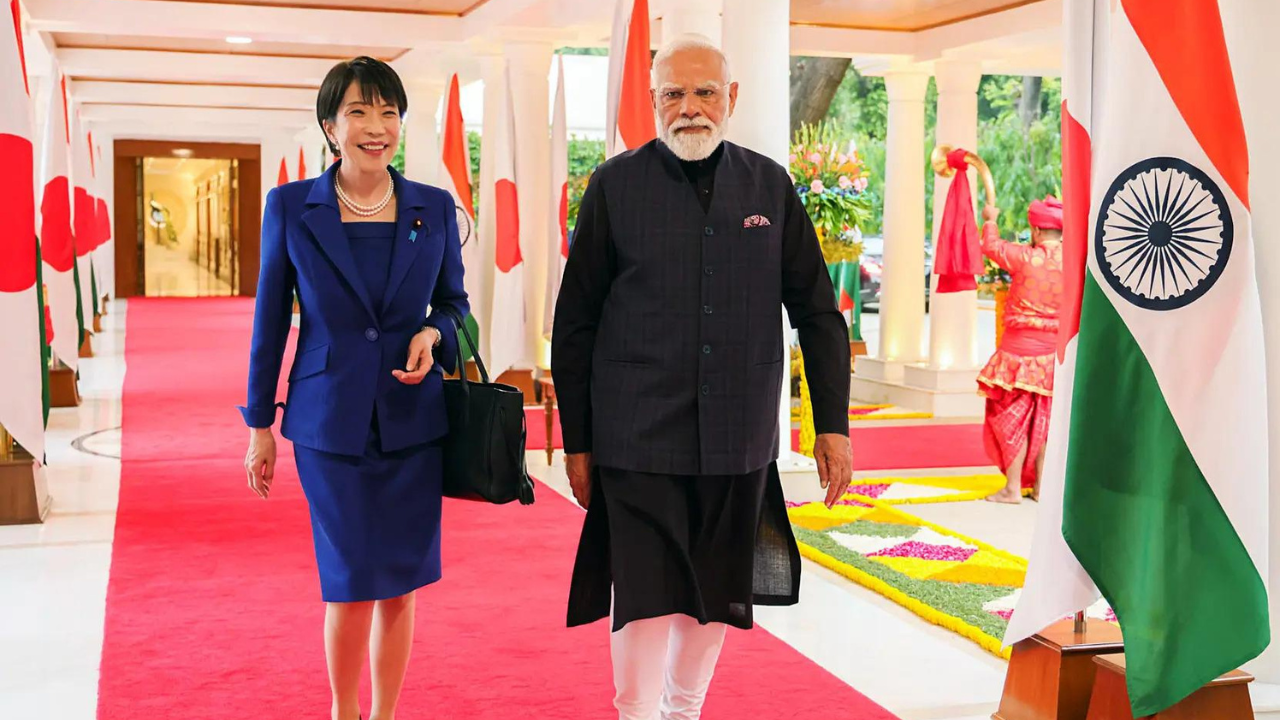
Japanese Prime Minister Sanae Takaichi arrived in India on her inaugural visit as PM, bringing with her a significant business delegation to bolster bilateral ties. The timing underscores Japan's commitment to strengthening its relationship with India at multiple strategic levels, from defence cooperation to emerging technologies.
During the 16th annual India-Japan Summit with Prime Minister Narendra Modi, both nations worked towards finalising a comprehensive economic roadmap. The discussions encompassed critical sectors including artificial intelligence, renewable energy, and defence cooperation. The presence of a high-powered business delegation signalled Japan's intent to deepen commercial engagement with Indian industries and enterprises.
This summit represents a critical moment in India-Japan relations, as both countries navigate an increasingly complex geopolitical landscape in Asia. The partnership has evolved beyond traditional trade relationships to encompass security partnerships, technological innovation, and energy security—areas crucial for both nations' long-term stability and growth.
The economic roadmap being finalised is expected to provide a structured framework for collaboration over the coming years. Enhanced defence ties reflect shared concerns about regional stability, while the focus on AI and energy addresses global challenges and India's development goals. Japan's technological expertise combined with India's innovation potential positions both countries for mutually beneficial outcomes.
The strengthened India-Japan relationship carries implications for the broader Indo-Pacific region, signalling a consolidated approach towards maintaining peace, stability, and economic prosperity. For India, this partnership bolsters its position as a key player in regional geopolitics, while for Japan, it reinforces strategic engagement in Asia beyond China.
Source: Hindustan Times